


The Enduring Voice of Nikolai Medtner: Life • Art • Legacy, Part 2
- Jul 10
- 5 min read
Updated: Jul 26
Part 2 — Art: Tradition, Conviction, and the Making of an Artist

Great artists are not formed in isolation.
Their artistic voices emerge through teachers, friendships, places, convictions, and the historical circumstances that shape their lives. Few composers illustrate this more clearly than Nikolai Medtner, whose artistic identity was forged through a lifelong dialogue with tradition.
A Musical Household
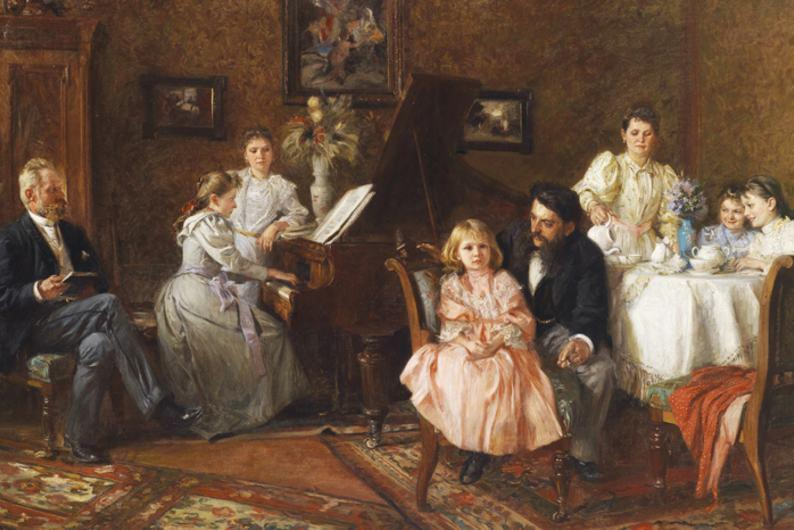
Medtner was born in Moscow into an educated family of German and Russian heritage. Music occupied an important place in the household, but so too did literature, languages, and philosophy.¹
His first piano teacher was his mother, Alexandra Medtner, an accomplished musician who recognized his unusual gifts at an early age. Contemporary accounts describe the young Medtner as thoughtful and introspective, qualities that would remain characteristic throughout his life.²
Unlike the familiar narratives of youthful genius overcoming adversity, Medtner developed within an environment that encouraged disciplined study and intellectual curiosity. The piano became not simply an instrument of performance, but the medium through which he explored ideas.
The Moscow Conservatory
At the age of twelve, Medtner entered the Moscow Conservatory, one of Europe's foremost musical institutions. Founded by Nikolai Rubinstein, the Conservatory combined rigorous technical training with a profound respect for the Austro-German classical tradition.³
Among the teachers who most deeply influenced Medtner was Sergei Taneyev (1856–1915), a composer, pianist, and theorist whose mastery of counterpoint was legendary. Taneyev's influence extended beyond technical instruction. Taneyev taught that musical freedom rested not on spontaneity alone, but on a profound command of musical architecture. This conviction would remain central to Medtner's own artistic philosophy.

The lessons Medtner absorbed during these years remained evident throughout his career. His sonatas, chamber works, and Fairy Tales reveal a remarkable ability to derive large musical structures from small motivic ideas, a characteristic frequently noted by performers and scholars alike.⁴
The Conservatory also placed Medtner within a broader artistic lineage. Bach, Beethoven, and Brahms were not treated merely as historical monuments but as living models of compositional thought. Their influence would become one of the defining features of Medtner's own musical language.
Choosing the Composer's Path
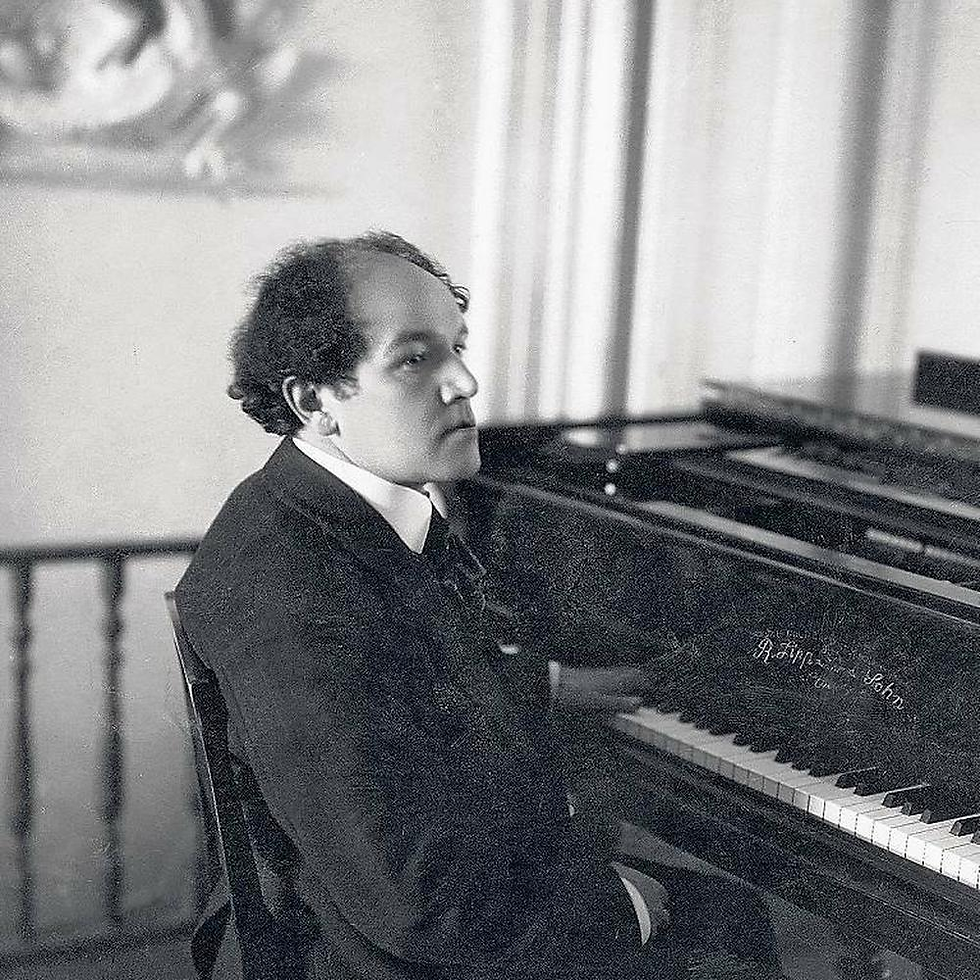
In 1900, Medtner graduated from the Conservatory with the Gold Medal in piano. His technical accomplishments suggested a successful future as a concert virtuoso.⁵
Instead, he chose composition.
The decision reflected more than professional preference. For Medtner, composition represented the highest form of musical expression. Performance preserved great works; composition contributed new ones to the tradition.
His earliest published pieces already display the characteristics that would define his mature style: organically developed themes, contrapuntal richness, and a preference for structural coherence over virtuosic display.
In choosing composition over a full-time virtuoso career, Medtner accepted a path that offered fewer public rewards but greater opportunity to contribute to the musical tradition he revered.
Friendship with Rachmaninoff

Among the most significant relationships of Medtner's life was his friendship with Sergei Rachmaninoff.
The two men first met in Moscow and remained devoted friends for the rest of their lives. Although their public careers followed different trajectories, their mutual admiration never diminished. Rachmaninoff frequently performed Medtner's music, offered financial support during difficult periods, and dedicated the revised version of his Fourth Piano Concerto to Medtner in 1941.⁶
Their correspondence reveals a friendship grounded in shared artistic values: melody, structural integrity, and an abiding faith in the expressive possibilities of tonal music.
A Changing Musical Landscape
Across Europe, composers were rethinking harmony, rhythm, and musical form in ways that challenged long-held artistic practices. For many composers, the development of new musical languages became one of the defining artistic pursuits of the early twentieth century. Medtner did not reject this spirit of exploration. Rather, he questioned whether artistic value could be measured primarily by novelty. Instead, he sought to deepen the expressive possibilities of tonal music through ever greater structural refinement. These convictions would later find their fullest expression in The Muse and the Fashion, where he argued that the enduring principles of music remained independent of changing aesthetic trends.⁷ They would also become the source of his remarkable artistic resilience during the upheavals that soon transformed his life.
Revolution and Exile

The Russian Revolution fundamentally altered Medtner's circumstances.
Like many artists and intellectuals, he eventually left Russia, spending periods in Germany and France before settling permanently in England.⁸
Exile brought considerable hardship and isolation. Separated from the cultural environment that had shaped him, Medtner found himself composing for audiences whose musical priorities were increasingly different from his own. Financial insecurity became a recurring concern, and the cultural institutions that had supported his early career were no longer available.
Yet history changed Medtner's circumstances more than it changed the artist himself. Despite these hardships, he never abandoned the artistic ideals that had shaped him from the beginning. He continued composing with the same remarkable consistency that had defined his work from the outset.
An Artist of Conviction
To describe Medtner simply as a conservative composer is to misunderstand both the man and his music.
He did not preserve tradition because he feared change.
He preserved it because he believed that the greatest artistic discoveries remained possible within it. For Medtner, remaining faithful to tradition did not limit originality; it made originality possible.
This distinction lies at the heart of Medtner's artistic identity.
For Medtner, tradition was neither nostalgia nor imitation. It was a living inheritance, continually renewed through creative imagination. His life illustrates a composer who responded to historical upheaval not by abandoning his ideals but by reaffirming them.
An Artistic Identity
The artist who emerged from Moscow would spend the remainder of his life refining the ideals that had shaped him from the beginning. Those ideals would define not only his music, but the artistic inheritance he would leave to future generations.
Notes
Barrie Martyn, Medtner: His Life and Music (Aldershot: Scholar Press, 1995), 1–15.
Martyn, Medtner, 10–16.
Christoph Flamm, biographical studies on Medtner and the Moscow Conservatory; Martyn, Medtner, 16–29.
Michael Allis, ed., The Piano Sonatas of Nikolai Medtner (Woodbridge: Boydell Press, 2014), Introduction; Wendelin Bitzan, selected analytical writings.
Martyn, Medtner, 30–36.
Geoffrey Norris, Rachmaninoff (New York: Schirmer Books, 1994); Martyn, Medtner, chapters on the Medtner–Rachmaninoff friendship.
Nikolai Medtner, The Muse and the Fashion, trans. Alfred J. Swan (London: Hollen Street Press, 1951).
Martyn, Medtner, chapters covering emigration and the English years.


